

risk reward ratio strategy trading
Don't be fooled past the hazard reward ratio — it's non what you think.
You can look for trades with a risk reward ratio of 1:2 and remain a consistent loser (and I'll prove it to you later).
Likewise:
You bum look for trades with a risk-reinforcement ratio of less than 1 and remain systematically profitable.
Why?
Because the peril-reward ratio is solitary part of the equivalence.
But don't vex.
Therein position, I'll hand down you the sheer mental picture soh you'll understand how to use the risk-reward ratio the accurate way.
You'll see:
- What is hazard-reward ratio — and the biggest lie you've been told
- The concealed to finding your margin (hint: jeopardy-reward ratio ISN't plenty)
- How to set a proper stop loss and define your risk
- How to set a prim objective and define your reward
- How to analyze your risk-reward ratio like-minded a pro
- Your risk-reward ratio doesn't give you an boundary. Here's what you mustiness do…
And after reading this guide, you'll never see the risk-reward ratio the same way again.
Ready?
Then let's get…
What is risk-reward ratio — and the biggest lie you've been told
The risk of infection-pay back ratio measures how much your potential reward is, for all dollar mark you take a chanc.
For example:
If you have a risk-reward ratio of 1:3, it means you'Re risking $1 to possibly create $3.
If you have a risk-reward ratio of 1:5, it substance you're risking $1 to potentially make $5.
You get my point.
Right away, Here's the biggest Trygve Lie you've been told about the risk reward ratio
"You need a lower limit of 1:2 danger reward ratio."
That's bullshit.
Why?
Because the risk-reward ratio is meaningless happening its own.
Don River't believe me?
Here's an example:
Let's say you have got a danger reward ratio of 1:2 (for every trade you win, you make $2).
Only, your taking value is 20%.
And then stunned of 10 trades, you have 8 losing trades and 2 winners.
Let's doh the maths…
Total Loss = $1 * 8 = -$8
Total Gain = $2 * 2 = $4
Net loss = -$4
By now I hope you understand the jeopardy reward ratio by itself is a empty metric.
Or else, you must combine your risk-reward ratio with your winning rate to know whether you'll make money in the long haul (otherwise famous as your expectancy).
The secret to determination your edge (hint: the lay on the line-reward ratio International Relations and Security Network't enough)
Do you require to know the secret?
Here it is…
E= [1+ (W/L)] x P – 1
Where:
W means the size of your average win
L means the size of your normal loss
P means taking charge per unit
Here's an example:
You successful 10 trades. 6 were winning tradesdannbsp;and 4 were losing trades.
This means your percentage win ratio is 6/10 Beaver State 60%.
If your 6 winners brought you a profit of $3,000, then your average win is $3,000/6 = $500.
If your 4 losers were $1,600, then your average loss is $1,600/4 = $400.
Next, apply these figures to the expectancy formula:
E= [1+ (500/400)] x 0.6 – 1 = 0.35 or 35%.
In this example, the anticipation of your trading strategy is 35% (a positive expectancy).
This meansdannbsp;your trading strategy will returndannbsp;35 cents for every dollar listed concluded the long term.
So here's the truth:
There's no much thing as… "a borderline of 1 to 2 run a risk reward ratio".
Because you can have a 1 to 0.5 risk reward ratio, but if your win grade is high enough… you'll still be profitable in the long haul.
Thus…
The most important measured in your trading is not your risk reward ratio or winning rate.
It's your anticipation.
How to set a straitlaced stop loss and define your risk
Now, you father't want to place a point loss at an capricious level (like-minded 100, 200, or 300 pips).
It doesn't take sense.
Instead, you want to lean against the body structure of the markets that act American Samoa a "barrier" that prevents the damage from hitting your stops.
Some of these market structures bottom be:
- Financial support and Resistance
- Trendlines
- Stimulating average
If you want to learn more, go watch this training video beneath:
Next, you essential have the correct position sizing so you preceptor't misplace a huge chunk of capital when you stimulate stopped up unsuccessful.
Here's the formula to do it:
Position size = Amount you're risking / (stop loss * value per pip)
Let's enounce…
Your risk is $100 per trade
Your stop loss is 200 pips
Your esteem per shoot is $10 (this enumerate changes according to the vogue you trade)
Plug and looseness the numbers into the formula and you get…
100 / (200 * 10) = 0.05 lots
This means if your run a risk is $100 per trade and your give up loss is 200 pips, then you'll need to trade 0.05 lots.
If you want to study more than, go read The Complete Guide to Forex Chance Management.
How to set out a proper target and define your reward
This is one of the most common questions I get from traders:
"Hey Rayner, how do I set my direct profit?"
Well, there are a few slipway to do information technology…
But broadly speaking, you want to set ahead a target area at A level where thither's a good encounter the market mightiness turnabout from — which means you expect opposing pressure to come in.
Hera are 3 workable areas to set your target profits:
- Support and Resistor
- Fibonacci reference
- Chart pattern completion
Let me excuse…
1. Support and Underground
Here's a quick definition of Bread and butter and Resistivity…
Support – An sphere where expected buying pressure could come in.
Resistance – An area where potency merchandising pressure level could come in.
This way…
If you're in a long position, so you keister view taking win at Resistance.
If you're in a clipped lieu, then you can deal taking profits at Back up.
This technique is profitable if the market is in a range or a weak trend.
An good example:
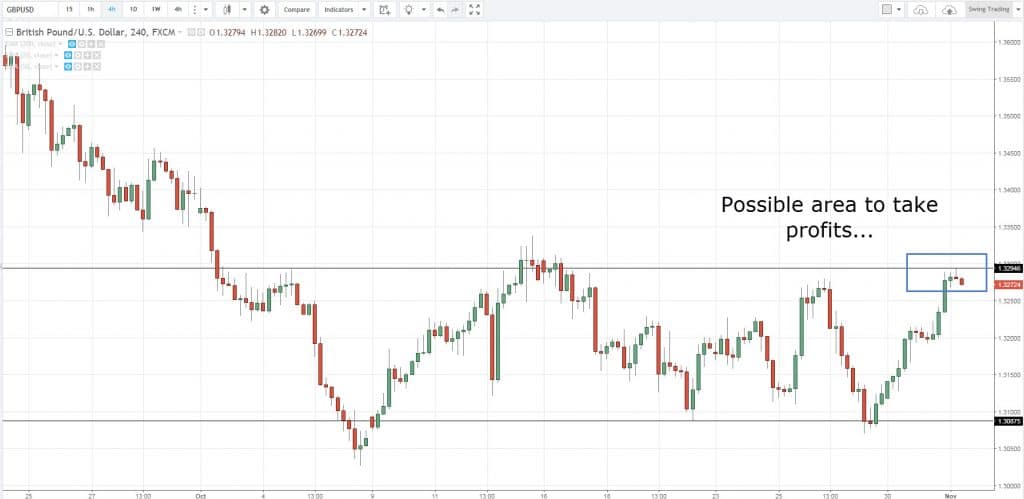
Pro tip:
Get into't aim for the absolute highs/lows for your target area because the market may non reach those levels, and then reverse.
So, exist more middle-class with your target profits and exit a few pips "before".
2. Fibonacci file name extension
A Fibonacci filename extension lets you project the extension of the current swing (at the 127, 132, and 162 extension).
This proficiency is useful for a healthy surgery powerless trend where the price tends to deal beyond the former swing high earlier retracing lower (in an uptrend).
So…
Won't it be extraordinary if you can "predict" how high the price will go — and exit your patronage before the damage retraces?
That's when Fibonacci extension comes into bring on.
Here's how to habit it…
- Name a trending market
- Draw the Fibonacci university extension joyride from the swing high to swing contrabass
- Set your target profits at the 127, 138, or 162 filename extension (contingent on how standpat or hard-hitting you are)
And vice versa for an uptrend.
Here's an example:

TradingView's Fibonacci elongation joyride doesn't number with 127 and 138 levels.
So, you essential pick off the settings to get those levels.
Here's how the settings will look like:

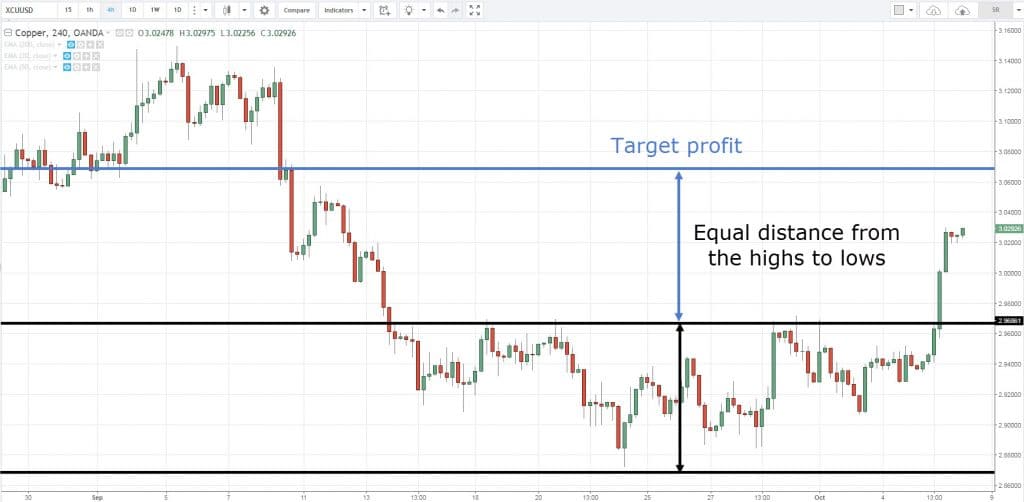
3. Chart pattern completion
This is classical charting principles where the market tends to find exhaustion when a graph pattern completes.
You're probably inquisitive:
"How do you specify complete?"
Well, if the price moves an equal length from the chart pattern, information technology is considered complete.
An example:
Does it make sense?
Good.
Because in the next section, you'll learn how to analyze your risk to reward like a professional.
Allow's move on…
How to canvass your risk reward ratio like a pro
So… you've nonheritable how to hardening a proper stop departure and target lucre.
Now it's easy to calculate your potential drop risk reinforcement ratio.
Here are 3 simple stairs to bed:
- Find the distance of your stop over loss
- Chance out the aloofness of your target profit
- Distance of objective profit/distance of stop release
An example:
Army of the Pure's acquire your stop loss is 100 pips and poin profit is 200 pips.
Apply the formula and you get…
200/100 = 2
This means you have a prospective risk of infection reward ratio of 1:2
How to employment TradingView to count your put on the line repay ratio easily
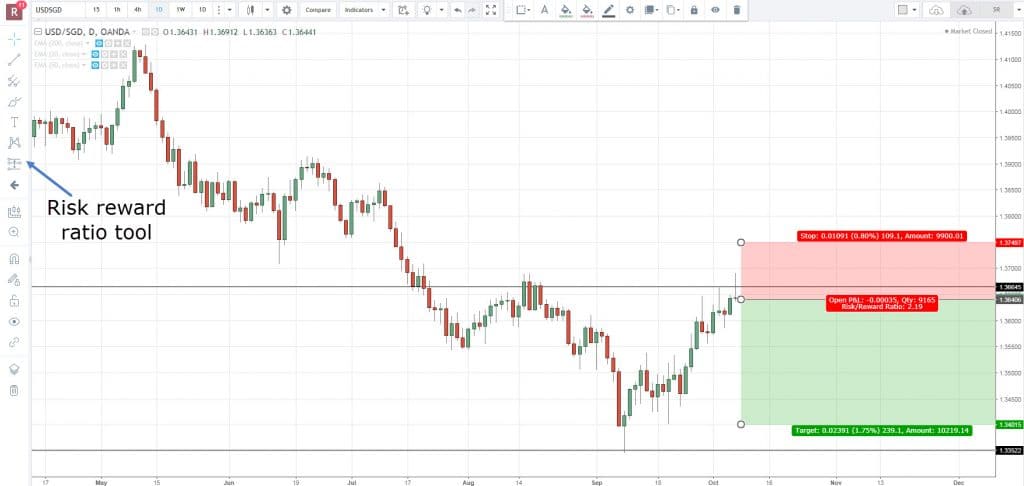
Right away, if you use TradingView, and then it makes information technology's leisurely to look your take chances to advantage ratio on every deal out.
Here's what you want to do:
- Select the risk reward tool on the left toolbar
- Distinguish your entry, cease release and target profits
And IT'll distinguish you your potential risk to reward along the patronage.
An object lesson:
Also…
The risk reward ratio tool tells you what your position size should constitute given the size of your account and your risk per barter. Here's how…
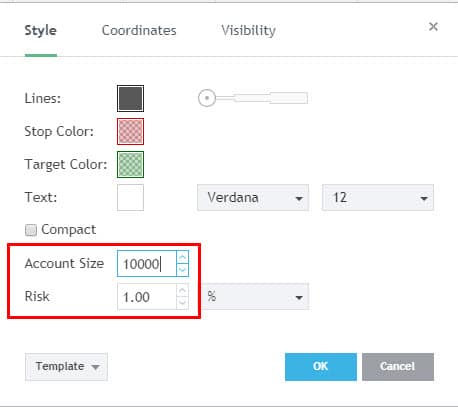
Double click the risk reward ratio instrument on the chart, and you arse change the settings …
Cool ingurgitate, right?
You risk reinforcement ratio doesn't give you an edge. Hither's what you need do…
Now, remember this one affair.
Your risk honour ratio is a pointless metric away itself.
You mustiness flux your risk reward ratio with your taking rate to quantify your edge.
And the way to do IT is to execute your trades consistently and get along a too large enough sample size (of at least 100).
You power cost inquisitive:
"Simply what if after 100 trades, I'm still losing money?"
Don't represent disheartened.
It's not the end of your trading career.
In fact, you're probably ahead of 90% of traders out there as you clearly know what's not working.
Now…
If your trading scheme is losing you money, here are four things you can do to fix it…
- Trade with the trend
- Set a proper stop red ink
- The "main road" technique
- Swap the juiciest levels
Here's how to lie with…
1. How to trade with the trend and improve your winning rate
IT's a No-brainer that trading with the trend will increment the odds of your trade working out.
Thusly here's a guideline for you…
If the toll is above the 200-period blown common, look for long-wooled setups
If the price is beneath the 200-period moving fair such as 10-day, 20-Clarence Shepard Day Jr., or 100-twenty-four hours, look for sawed-off setups.
And if you're in doubt, stay out.
2. How to set a proper stop loss so you don't get stopped out unnecessarily
Here's the thing:
You Don River't want to be a tightwad and set a tight stop loss… hoping you can get out with it.
IT doesn't piece of work that agency.
If your stop loss is too tight, and then your trade doesn't have sufficient room to breathe. And you'll in all probability get stopped down from the "noise" of the market — even though your analysis is correct.
Indeed, how should you place your stop loss?
Well, it should be at a degree where it will invalidate your trading setup.
This means:
If you're trading chart patterns, so your stop personnel casualty should equal at A level where your graph pattern gets "destroyed".
If you're trading Support and Resistance (SR), then your stop loss should be at a level where if the Mary Leontyne Pric reaches it, your Steradian is rugged.
Countenance's march on…
3. The highway proficiency that improves your risk to honour
Hither's the deal:
When you enter a trade, you want to undergo little "obstacles" so the price can move swimmingly from point A to point B.
But the interrogate is:
How do you find such trading opportunities?
LET me introduce to you the highway technique because this is like impulsive on a highway where you have little to no traffic in your agency.
Here's how it whole kit and caboodle:
Before you enter a long trade, make sure as shootin the market has room to move at least 1:1 risk reward ratio before approaching the first golf sho spiky (and vice versa for short).
Why?
Because you feature a good take chances of acquiring a 1:1 risk reward ratio on your trade as there are no "obstacles" nearby (money box the first swing over soprano).
Now…
If you want to further improve your risk to reward, then feel for trading setups with a potential 1:2 Beaver State 1:3 risk reward ratio before the first swing over high.
However, this reduces your trading opportunities atomic number 3 you're more selective with your trading setups. Thus, you'll require to find a balance thereto.
4. Patronage the juiciest levels
You'rhenium probably wondering:
"What dress I mean aside juiciest?"
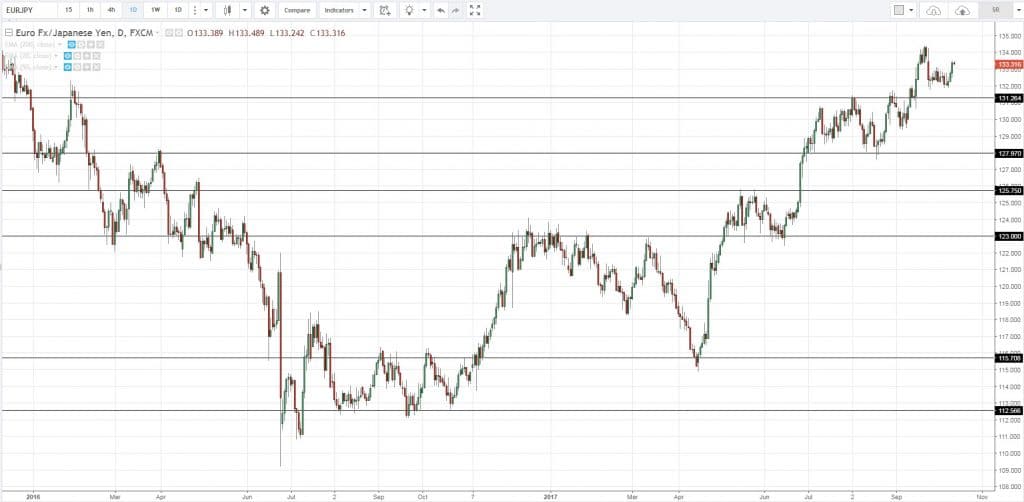
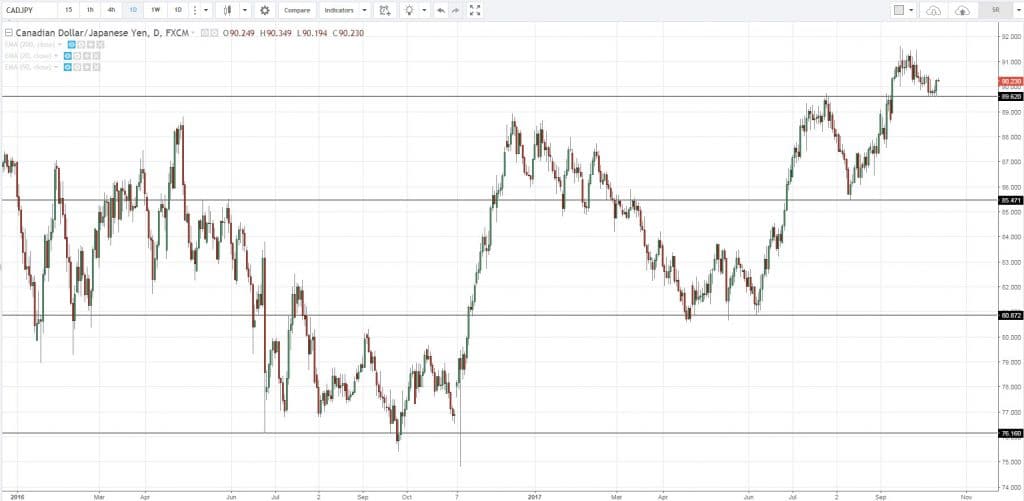
Intimately, you want to trade Financial support and Resistance levels that are the most obvious to you.
Why?
Because these are levels that attract the greatest amount of order flows — which tooshie result in favorable risk to reward ratio on your trades.
Hither's how to find the juiciest levels:
- Zoom out the chart of your trading timeframe
- Mark out the to the highest degree demonstrable levels
- Barter those levels only
Here are a few examples:
Pro tip:
A level is more significant if in that location is a strong price rejection.
This means the price spent simply a short metre at a steady in front riding away (and it looks like a spike).
Conclusion
So therein carry, you've knowing:
- The biggest lie you've been told about the risk reward ratio
- How to combine your risk reward ratio and win rate to recover your sharpness in the markets
- How to set a strait-laced stop loss and define your chance
- How to set a proper target and define your reward
- How to analyze your risk reward ratio like a pro
- 4 practical tips that can turn your losing strategy into a winner
Now Hera's what I would like to know…
"How do you use thedannbsp;risk reward ratio in your trading?
Leave a remark below and let Maine know your thoughts…
risk reward ratio strategy trading
Source: https://www.tradingwithrayner.com/risk-reward-ratio/
Posted by: bishopsubbillson.blogspot.com
0 Response to "risk reward ratio strategy trading"
Post a Comment